 English

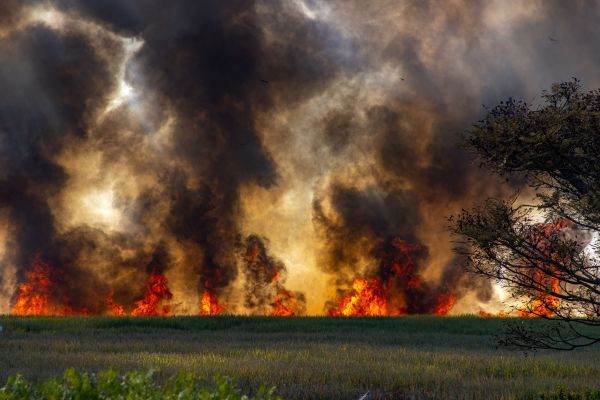
High temperatures, dry vegetation and strong winds have fueled new wildfires in southern France, where hundreds of firefighters are working to contain the flames. The most affected areas are the Var department, near the Gulf of Saint-Tropez, and the difficult-to-reach mountainous regions of the island of Corsica, according to AFP. The most powerful fire broke out on Sunday in the commune of Taradeau, in the Var department. Fueled by the wind, the fire quickly spread to the town of Les Arcs-sur-Argens, destroying about 180 hectares in less than two hours. More than 600 firefighters were mobilized to extinguish the fire. In the two affected towns, about 150 people were evacuated and sheltered in cultural centers and a school. According to the authorities, the fire reached a peri-urban area, where its spread was slowed. The flames destroyed ten homes, but the intervention of the rescue teams allowed the protection of another 60 houses.
At the end of the day, the fire, which had affected almost 200 hectares, was not yet localized, but the authorities considered that the evolution of the situation was favorable.
• Fires in Corsica continue after a week
In the north of the island of Corsica, two fires caused by lightning on July 12 continue to burn in isolated and difficult-to-reach mountainous areas. The most important outbreak, in the Albertacce area, expanded again on Sunday, destroying almost 326 hectares of vegetation. The prefecture of Haute-Corse stated that the rugged terrain, difficult access to the outbreaks and conditions favorable to the spread of the fire are making interventions difficult.
160 firefighters were mobilized to extinguish the fire, supported by 66 special vehicles, two Pelican aircraft, a tanker helicopter and a reconnaissance aircraft. For safety reasons, authorities have closed several tourist routes, including a section of the famous GR20 mountain route.
• Europe increasingly affected by wildfires
France is not the only European country facing forest fires at this time. Portugal, Spain and Greece are also under pressure from fires fueled by extreme temperatures and prolonged drought. Similar phenomena have also been reported in Germany, although on a smaller scale. According to specialists cited by AFP, the frequency and intensity of these fires are favored by the succession of heat waves and periods of drought, phenomena associated with climate change.






















 Euro
Euro Dolar SUA
 Franc elveţian
 Liră sterlină
 Gram de aur




















Reader's Opinion